
Blog
How to Choose the Right Tiles for Your Home in Nepal

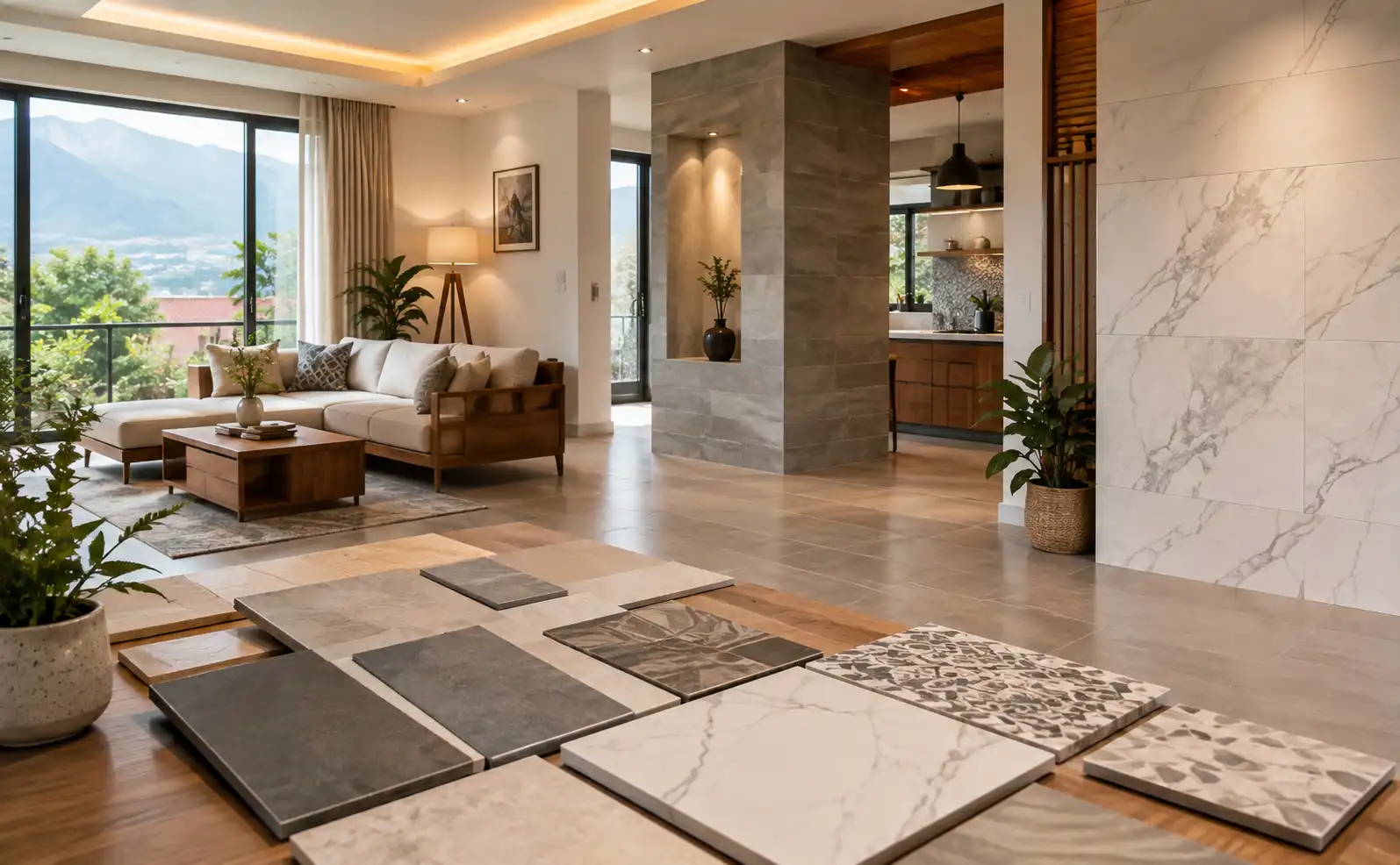
Choosing tiles may look simple until you actually visit a showroom.
There are different sizes, finishes, colours, materials, and price ranges. A tile that looks great on display may not necessarily be the best option for every part of your home.
The right choice depends on where the tile will be used, how much traffic the area receives, how easy it is to maintain, and how well it works with the overall design.
Here are some important considerations before selecting tiles for your project.
1. Start With Where the Tile Will Be Used
The first question should not be:
“Which tile looks best?”
It should be:
“Where am I going to use it?”
Different spaces have different requirements.
For example:
- Living rooms usually need durable and easy-to-maintain flooring.
- Bathrooms require surfaces suitable for wet areas.
- Kitchens should be easy to clean.
- Balconies and outdoor areas require materials suited to changing weather conditions.
- Commercial spaces may require tiles that can handle heavier foot traffic.
Choosing according to the application helps narrow down the options quickly.
2. Choose the Finish Carefully
Tile finish affects both appearance and practicality.
Glossy Tiles
Glossy surfaces reflect more light and can make a room feel brighter.
They are often used on walls and decorative areas.
However, highly polished surfaces may not always be the best choice for wet floors.
Matte Tiles
Matte finishes provide a softer appearance and are commonly considered for areas where better grip and easier everyday use are important.
Before buying, always consider how the surface will perform in the actual location.
3. Think About Tile Size
Tile size can significantly change how a room looks.
Large-format tiles can create a cleaner appearance because there are fewer visible grout lines.
Smaller tiles can work well in compact areas, feature sections, and places requiring more detailed installation.
But bigger is not automatically better.
The room dimensions, layout, cutting requirements, and installation conditions should all be considered.
4. Consider Maintenance
A beautiful surface can quickly become frustrating if maintaining it requires too much effort.
Before selecting a tile, consider:
- How easily does it show dust?
- Will stains be easy to clean?
- How visible will water marks be?
- How much grout will the installation require?
- Is the surface suitable for frequent cleaning?
For frequently used areas, practicality should receive as much attention as appearance.
5. Do Not Choose Colour in Isolation
A tile sample may look very different once it covers an entire floor or wall.
Consider it together with:
- Wall colours
- Furniture
- Doors
- Kitchen cabinets
- Lighting
- Ceiling
- Other finishes in the room
Neutral tiles can provide flexibility, while stronger patterns or colours can work well when used intentionally.
Whenever possible, compare samples inside the actual space before making the final decision.
6. Check the Actual Product Before Ordering
Product photos are useful for shortlisting, but they should not always be the final basis for purchasing.
Check:
- Actual colour
- Surface texture
- Thickness
- Edge finishing
- Pattern variation
- Available quantity
- Product specifications
Tiles from different batches may sometimes show slight variations, so confirming availability before installation begins can help prevent problems later.
7. Calculate Quantity Before Purchasing
Tiles usually require some additional quantity because of:
- Cutting
- Corners
- Layout adjustments
- Breakage
- Future replacement
The required extra quantity depends on the room layout, tile dimensions, and installation pattern.
Ask your installer, designer, or project team to calculate the required quantity before ordering.
8. Balance Design With Budget
The most expensive tile is not automatically the best tile for your project.
A better approach is to compare:
Suitability + Quality + Appearance + Maintenance + Budget
You may choose a statement tile for one important area and use simpler options elsewhere.
Good planning allows the budget to be distributed where it creates the most value.
Final Thought
Tiles remain part of a space for years, so the decision should go beyond colour and price.
Start with the purpose of the room, understand the practical requirements, and then choose the design that works with your overall space.
NepBuilds aims to make construction and interior decisions easier by bringing together practical information, professional services and a growing marketplace for building and interior products.
Planning an interior or renovation project?
Talk to the NepBuilds team and get guidance for your space.
NepBuilds — Building Possibilities.


